Here's a breakdown:
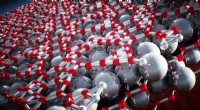
* Hydrogen bonding: A special type of dipole-dipole interaction where a hydrogen atom covalently linked to a highly electronegative atom (like oxygen, nitrogen, or fluorine) is attracted to an electron pair of another highly electronegative atom.
* Slight positive charge on hydrogen: The highly electronegative atom pulls the shared electrons in the covalent bond closer to itself, creating a partial negative charge (δ-) on that atom and a partial positive charge (δ+) on the hydrogen atom.
* Negative of nearby atom: The partially positive hydrogen atom is then attracted to the lone pair of electrons on a nearby electronegative atom, creating a weak interaction known as a hydrogen bond.
Key points:
* Stronger than van der Waals forces: Hydrogen bonds are stronger than regular dipole-dipole interactions and van der Waals forces, but they are weaker than covalent bonds.
* Important for many biological processes: Hydrogen bonds play a crucial role in many biological processes, such as:
* Holding DNA strands together
* Stabilizing proteins
* Facilitating water's unique properties (high boiling point, high surface tension)
Let me know if you want to learn more about hydrogen bonding!