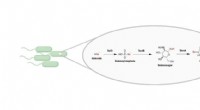
Here's a breakdown:
* Hydro means "water."
* Lysis means "breaking down."
Essentially, hydrolysis is a chemical process where water molecules are added to break down a larger molecule into smaller ones.
Here's a simple example:
* Sucrose (table sugar) is a disaccharide (two sugar units linked together).
* When water is added, it breaks the bond between the two sugar units, yielding glucose and fructose.
Other examples of hydrolysis include:
* Digestion of food: Our bodies use hydrolysis to break down carbohydrates, proteins, and fats into smaller molecules that can be absorbed.
* Breaking down polymers: Hydrolysis is used to break down polymers like starch, cellulose, and proteins into their monomeric units.
* Salts dissolving in water: When ionic salts like sodium chloride (NaCl) dissolve in water, the water molecules break down the ionic bonds, separating the sodium and chloride ions.
Hydrolysis is a crucial process in many biological and chemical reactions. It plays a significant role in everything from the digestion of food to the synthesis of complex molecules.