1. Change in Physical Properties:
* Boiling point elevation: The boiling point of the solution increases. This is because the solute particles interfere with the vaporization of the solvent molecules.
* Freezing point depression: The freezing point of the solution decreases. This is due to the solute particles disrupting the formation of the solvent's crystal lattice.
* Vapor pressure lowering: The vapor pressure of the solution decreases. This is because the solute particles occupy space at the surface of the solution, reducing the number of solvent molecules that can escape into the gas phase.
* Osmotic pressure: The solution develops osmotic pressure, which is the pressure that needs to be applied to prevent the inward flow of solvent across a semipermeable membrane.
2. Change in Chemical Properties:
* Chemical reactions: Depending on the nature of the solute and solvent, chemical reactions may occur, leading to the formation of new substances.
* pH change: The pH of the solution may change depending on the acidity or basicity of the solute.
* Conductivity: The conductivity of the solution may increase if the solute is an electrolyte (a substance that dissociates into ions when dissolved).
3. Changes in the Structure of the Solution:
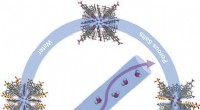
* Hydration: In aqueous solutions, the solvent (water) molecules form hydration shells around the solute ions or molecules.
* Intermolecular interactions: The solute and solvent molecules interact with each other through various intermolecular forces, such as hydrogen bonding, dipole-dipole interactions, or London dispersion forces.
4. Saturation and Supersaturation:
* Saturation: When a solution can't dissolve any more solute at a given temperature, it is said to be saturated.
* Supersaturation: A solution can sometimes hold more solute than it normally would at a given temperature, creating a supersaturated solution. This is a temporary state, and the excess solute will eventually precipitate out.
5. Diffusion and Osmosis:
* Diffusion: The solute particles will tend to spread out evenly throughout the solution due to diffusion.
* Osmosis: If a solution is separated from a pure solvent by a semipermeable membrane, solvent molecules will move across the membrane to dilute the solution, a process called osmosis.
The specific changes that occur when solutes are dissolved depend on the nature of the solute and the solvent. However, the general principles outlined above provide a framework for understanding the behavior of solutions.