1. Free Electrons:
* Metals: Good conductors like copper and silver have a "sea" of free electrons. These electrons are not tightly bound to any particular atom and can move freely throughout the material. When heat is applied, these free electrons gain kinetic energy and collide with other atoms, transferring that energy throughout the material. The more free electrons a material has, the faster heat can be transferred.
2. Strong Bonding:
* Stronger bonds: Molecules with strong bonds, like metallic bonds, have atoms that are closely packed together. This allows for efficient transfer of vibrational energy between atoms, which is the primary mechanism of heat transfer within solids.
3. Low Density:
* Lower density: While it may seem counterintuitive, materials with lower density can sometimes be better conductors. This is because the atoms are spaced further apart, allowing vibrations to travel more quickly. However, this is only true if the material still has a high enough density to facilitate efficient transfer of energy.
4. Crystal Structure:
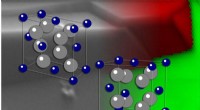
* Regular structure: Materials with a highly ordered, crystalline structure (like metals) can efficiently conduct heat. The regular arrangement of atoms allows for predictable and efficient energy transfer through vibrations. Disordered structures, like amorphous solids, can hinder heat flow.
5. Absence of Impurities:
* Purity: Impurities and defects in the crystal lattice of a material can scatter heat waves and disrupt their flow, decreasing thermal conductivity. The more pure and perfect the crystal structure, the better the heat conduction.
In summary:
The combination of free electrons, strong bonding, low density, regular crystal structure, and high purity contribute to the excellent heat conductivity of good conductors. These properties allow for the rapid transfer of energy through the material, making it a good heat conductor.