* Electrical Conductivity: These electrons can easily move throughout the metal's structure, allowing for the flow of electric current. When an electric field is applied, the electrons drift in a direction opposite to the field, carrying the charge.
* Thermal Conductivity: The mobile electrons can also carry heat energy. When one part of the metal is heated, the electrons in that region gain energy and move to cooler regions, transferring heat energy.
* Metallic Luster: The mobile electrons can absorb and re-emit light, giving metals their characteristic shine.
* Malleability and Ductility: The mobile electrons allow metal atoms to slide past each other without breaking the metallic bond. This is why metals can be hammered into thin sheets (malleability) or drawn into wires (ductility).
How it Works:
In a metal, the outermost electrons of the atoms are loosely bound and can move freely throughout the crystal lattice. This "sea" of mobile electrons is what makes metals different from other materials.
The "Electron Sea Model":
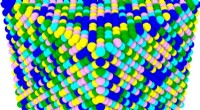
A simplified model to understand this concept is the "electron sea model". Imagine a metal as a lattice of positive ions surrounded by a "sea" of delocalized electrons. These electrons are not bound to any particular atom but are free to move throughout the entire structure.
Key Points to Remember:
* The mobile electrons are responsible for many of the defining properties of metals.
* They are delocalized and free to move throughout the entire metallic lattice.
* The "electron sea model" is a helpful visualization of this concept.