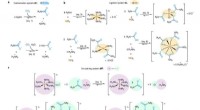
* Charge Repulsion: A hydronium ion already has a positive charge. Adding another proton (also positively charged) would create a highly unstable species with a +2 charge. Like charges repel, making this configuration energetically unfavorable.
* Size and Stability: Hydronium ions are relatively small and already have a full complement of electrons around the central oxygen atom. Adding another proton would disrupt this stability and create an even smaller, highly reactive species.
* Equilibrium: While the reaction might occur to a tiny extent, the equilibrium strongly favors the formation of hydronium ions rather than the hypothetical "diprotonated water" species.
In summary:
While a hydronium ion *could* technically accept another proton, the process is extremely unfavorable due to electrostatic repulsion, size considerations, and the resulting instability.