Here's why:
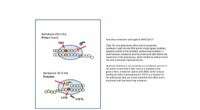
* RNA's structural versatility: RNA molecules can fold into complex three-dimensional structures, similar to proteins. This allows them to create specific active sites that bind to substrates and facilitate chemical reactions.
* RNA's chemical reactivity: RNA contains functional groups that can participate in chemical reactions, such as the 2'-hydroxyl group on the ribose sugar, which can act as a nucleophile.
Examples of ribozymes include:
* Ribonuclease P: This ribozyme processes transfer RNA (tRNA) molecules by cleaving off extra nucleotides.
* Group I and II introns: These ribozymes catalyze their own splicing from precursor RNA molecules.
* Hammerhead ribozyme: This ribozyme cleaves RNA molecules at specific sites, and has been used in gene therapy research.
While DNA can also fold into complex structures, it generally lacks the catalytic versatility of RNA.
The discovery of ribozymes has been a major breakthrough in our understanding of the evolution of life. It suggests that RNA may have played a more central role in early life than originally thought, acting as both genetic material and catalysts.