Here's a breakdown:
* Diffusion: The movement of molecules from an area of high concentration to an area of low concentration. This happens naturally due to the random motion of molecules.
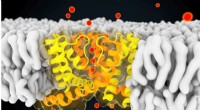
* Membrane: A thin layer of material that separates two areas. In biology, cell membranes are the most common example.
* Osmosis: The specific case of diffusion where water moves across a selectively permeable membrane from an area of high water concentration to an area of low water concentration.
Key points about osmosis:
* Selectively permeable membrane: This means the membrane allows some substances to pass through while blocking others. Cell membranes are selectively permeable, allowing water to pass through but blocking larger molecules like proteins and sugars.
* Water potential: This is a measure of the free energy of water in a particular environment. Water moves from areas of high water potential (where water is less "stressed") to areas of low water potential (where water is more "stressed").
* Osmotic pressure: The pressure that must be applied to a solution to prevent the inward flow of water across a semipermeable membrane. This is a measure of how strongly water wants to move across the membrane.
* Tonicity: This refers to the relative concentration of solutes in two solutions separated by a membrane.
* Isotonic: Solutions have equal solute concentrations.
* Hypertonic: The solution has a higher solute concentration than the other side of the membrane. Water will flow out of the cell to try to even out the concentrations.
* Hypotonic: The solution has a lower solute concentration than the other side of the membrane. Water will flow into the cell to try to even out the concentrations.
Examples of osmosis in action:
* Plant cells: Water moves into plant cells through osmosis, making them turgid (firm). This helps plants maintain their shape and structure.
* Red blood cells: If red blood cells are placed in a hypotonic solution, water will enter the cells, causing them to swell and potentially burst. In a hypertonic solution, water will leave the cells, causing them to shrink and shrivel.
Osmosis is a vital process for all living organisms, playing a role in nutrient transport, waste removal, and maintaining cell volume.