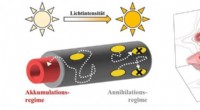
When a metal is subjected to stress, the grain boundaries can act as either sources or sinks for dislocations, which are defects in the crystal structure. If the grain boundaries are strong, they can prevent dislocations from moving, which makes the metal stronger. However, if the grain boundaries are weak, dislocations can easily move through them, which makes the metal more ductile.
In addition to their role in determining the mechanical properties of metals, grain boundaries can also affect their electrical, thermal, and magnetic properties. For example, the presence of grain boundaries can increase the electrical resistivity of a metal, and it can also affect the way that the metal responds to heat treatment.
The transformation of grain boundaries in a metal can be caused by a number of factors, including:
* Temperature: As the temperature of a metal increases, the grain boundaries become more mobile, which allows them to change shape and size.
* Stress: Stress can also cause grain boundaries to move, even at room temperature.
* Alloying: The addition of alloying elements can change the properties of the grain boundaries, making them either stronger or weaker.
The transformation of grain boundaries can have a significant impact on the properties of a metal. For example, by controlling the grain boundary structure, it is possible to produce metals with a wide range of properties, tailored to specific applications.
Here are some specific examples of how grain boundaries transform in a metal:
* Recrystallization: This is the process by which new grains form in a metal that has been deformed. During recrystallization, the grain boundaries move and change shape until they reach a stable configuration.
* Grain growth: This is the process by which grains in a metal grow in size. Grain growth occurs when the grain boundaries move and consume the boundaries of smaller grains.
* Phase transformations: Grain boundaries can also act as sites for phase transformations. For example, in a steel, the grain boundaries can act as nucleation sites for the formation of cementite (Fe3C) particles.
The study of grain boundaries and their transformation is a complex and important field of research. By understanding how grain boundaries behave, it is possible to design metals with the desired properties for a wide range of applications.