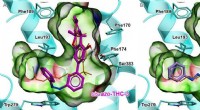
Bifluoride ions (HF2-) are a fascinating example of a molecule that exhibits hybrid bonding. Hybrid bonding occurs when atomic orbitals of different types combine to form new orbitals that have a unique shape and energy. In the case of bifluoride ions, the 2p orbitals of the fluorine atoms hybridize with the 1s orbital of the hydrogen atom to form three equivalent sp2 orbitals. These sp2 orbitals are then used to form three covalent bonds between the fluorine atoms and the hydrogen atom.
The evidence for hybrid bonds in bifluoride ions comes from a variety of sources, including:
* Electron diffraction studies: Electron diffraction studies have shown that the bond lengths and bond angles in bifluoride ions are consistent with the predictions of hybrid bonding.
* Vibrational spectroscopy: Vibrational spectroscopy studies have shown that the vibrational frequencies of bifluoride ions are consistent with the predictions of hybrid bonding.
* Theoretical calculations: Theoretical calculations have shown that the energy of bifluoride ions is minimized when the fluorine atoms and hydrogen atom are bonded together using sp2 hybrid orbitals.
The evidence for hybrid bonds in bifluoride ions is strong and convincing. This molecule provides a clear example of how atomic orbitals can combine to form new orbitals that have a unique shape and energy. Hybrid bonding is a fundamental concept in chemistry, and it plays an important role in understanding the structure and properties of molecules.
Applications of Hybrid Bonding
Hybrid bonding is a fundamental concept in chemistry, and it has a wide range of applications. Some of the most important applications of hybrid bonding include:
* Understanding the structure and properties of molecules: Hybrid bonding can be used to explain the structure and properties of a wide variety of molecules, including inorganic compounds, organic compounds, and biomolecules.
* Designing new materials: Hybrid bonding can be used to design new materials with specific properties, such as strength, toughness, and conductivity.
* Developing new drugs: Hybrid bonding can be used to develop new drugs that are more effective and have fewer side effects.
Hybrid bonding is a powerful tool that can be used to understand the structure and properties of molecules, design new materials, and develop new drugs. It is a fundamental concept in chemistry, and it plays an important role in many areas of science and technology.