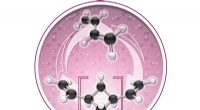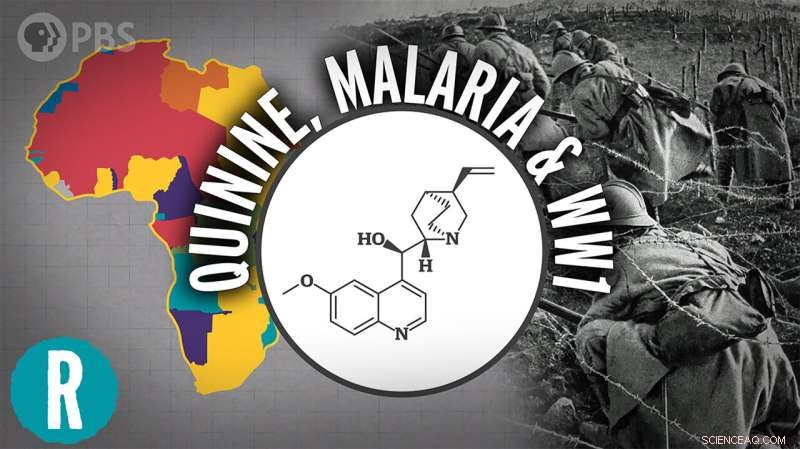
If we look at how the bark of the cinchona tree is used to treat malaria, we can see the cutting-edge chemistry of quinine binding an enzyme essential for the malaria parasite's survival. But if we look from another angle, we can see how that coincidental affinity may have been a major contributing factor to World War I: https://youtu.be/wnvo53xUxP4. Credit: The American Chemical Society
If we look at how the bark of the cinchona tree is used to treat malaria, we can see the cutting-edge chemistry of quinine binding an enzyme essential for the malaria parasite's survival.
But if we look from another angle, we can see how that coincidental affinity may have been a major contributing factor to World War I: