Analogous evolution refers to the development of similar traits in unrelated species due to similar environmental pressures or ecological niches. It's a process known as convergent evolution.
Here's a breakdown:
* Unrelated species: The species that evolve analogous features have different evolutionary origins. They are not closely related in the tree of life.
* Similar environmental pressures: These species face similar challenges in their environment, such as needing to fly, swim, or camouflage themselves.
* Similar traits: As a result of these pressures, they develop similar features, even though they have different genetic backgrounds.
Examples of analogous evolution:
* Wings: Birds, bats, and insects all have wings for flight, but their wings evolved independently.
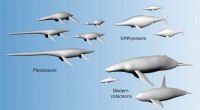
* Fins: Sharks (fish) and dolphins (mammals) both have fins for swimming, even though they belong to different classes of animals.
* Cacti and Euphorbs: Both are succulent plants that thrive in arid environments and have developed similar adaptations, such as spines and water-storing stems, but they belong to different families.
Key differences from homologous evolution:
* Homologous structures have a common ancestor and share similar underlying structures, even if they have different functions (e.g., the arm of a human, the wing of a bat, and the flipper of a whale).
* Analogous structures have different underlying structures but serve similar functions due to similar environments.
Understanding analogous evolution helps us:
* Appreciate the power of natural selection: It demonstrates how the environment can drive the evolution of similar features in unrelated organisms.
* Understand evolutionary relationships: It helps us distinguish between features that are inherited from a common ancestor and those that have evolved independently.
* Study adaptation: It provides valuable insights into how organisms adapt to specific environments.
In conclusion, analogous evolution is a fascinating example of how diverse lifeforms can find similar solutions to the same environmental challenges, showcasing the remarkable power of natural selection to shape the diversity of life on Earth.