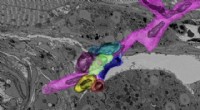
1. Membrane-Bound Organelles: Both plant and animal cells contain membrane-bound organelles, such as:
* Nucleus: Contains the cell's genetic material (DNA) and controls cellular activity.
* Endoplasmic reticulum (ER): A network of membranes involved in protein synthesis and lipid metabolism.
* Golgi apparatus: Modifies, sorts, and packages proteins and lipids.
* Mitochondria: Powerhouses of the cell, responsible for energy production (ATP).
* Lysosomes: Contain enzymes for breaking down cellular waste and debris.
2. Cytoplasm: Both cell types have cytoplasm, a gel-like substance that fills the cell and provides a medium for organelles to function.
3. Plasma Membrane: Both cells are enclosed by a plasma membrane, which regulates the passage of molecules in and out of the cell.
4. Ribosomes: Both cell types contain ribosomes, which are involved in protein synthesis.
5. Cytoskeleton: Both cells have a cytoskeleton, a network of protein fibers that provides structural support and allows for movement within the cell.
6. Similar Biochemical Processes: Plant and animal cells share many biochemical processes, such as:
* Cellular respiration: The process of converting glucose into energy.
* Protein synthesis: The process of creating proteins.
* DNA replication: The process of copying DNA.
In summary, plant and animal cells are similar in their basic structure and function as eukaryotic cells. They both possess membrane-bound organelles, a cytoplasm, and carry out similar biochemical processes. However, they also have some distinct differences that reflect their specific functions and roles in the organism.