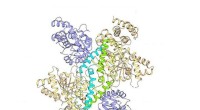
* Structure: Water is essential for maintaining the three-dimensional structure of proteins. The interactions between amino acids, like hydrogen bonding, are facilitated by the presence of water molecules. Without water, proteins would lose their shape and become dysfunctional. Imagine a delicate sculpture made of paper; if you remove the air (replace it with a vacuum), the paper will crumple and lose its shape. Water acts as a similar stabilizing force for proteins.
* Flexibility: Water allows proteins to be flexible and dynamic. This flexibility is crucial for their function as it allows them to:
* Bind to other molecules: Proteins often need to change shape slightly to interact with other molecules, like enzymes binding to substrates.
* Move within cells: Proteins need to be able to move around within the cell to perform their tasks.
* Solubility: Many proteins are soluble in water, allowing them to move freely and reach their target locations.
* Catalysis: Water plays a direct role in enzymatic reactions. It acts as a reactant or a product in many chemical reactions catalyzed by enzymes, which are protein catalysts.
In summary: Water is not just a solvent for proteins, but it plays a crucial role in their structure, flexibility, solubility, and catalytic activity. Without water, proteins would be unable to perform their essential functions.