Here's why:
* Blueprints contain instructions: Blueprints for a building hold the design and construction instructions.
* DNA contains instructions: DNA contains the genetic instructions for building and maintaining an organism. These instructions are encoded in the sequence of nucleotide bases (A, T, C, G).
However, there are key differences:
* Blueprints are static: Once created, blueprints don't change.
* DNA is dynamic: DNA can be replicated, transcribed into RNA, and translated into proteins, leading to changes in cellular function and even evolution.
* Blueprints are 2D: Blueprints are flat representations of a 3D structure.
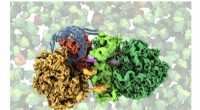
* DNA is 3D: DNA exists as a double helix, a complex, three-dimensional structure.
Therefore, while DNA is analogous to blueprints in its role as a set of instructions, it is a more dynamic and complex structure than a simple blueprint.