Plant Cells:
* Cell Wall: The rigid outer layer that provides structure and support.
* Chloroplasts: Green, oval-shaped organelles containing chlorophyll for photosynthesis.
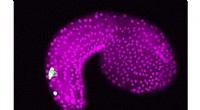
* Nucleus: A large, round structure containing the cell's genetic material (DNA).
* Vacuole: A large, fluid-filled sac that stores water, nutrients, and waste.
* Cytoplasm: The gel-like substance that fills the cell and contains organelles.
Animal Cells:
* Nucleus: Similar to the plant cell nucleus, but often appears less distinct.
* Cytoplasm: The gel-like substance that fills the cell and contains organelles.
* Cell membrane: The thin, flexible outer layer that encloses the cell.
Important Notes:
* Resolution: The ability to distinguish between two closely spaced objects. Simple compound microscopes have lower resolution than more advanced microscopes.
* Staining: Staining techniques enhance the visibility of certain cell structures.
* Cell Type: The size and shape of cells vary significantly. Some cells, like bacteria, are too small to be seen with a simple compound microscope.
* Preparation: Proper sample preparation is crucial. Thin slices or smears are often required.
Examples of things that are difficult to see with a simple compound microscope:
* Ribosomes: Tiny organelles involved in protein synthesis.
* Golgi apparatus: A series of stacked membranes involved in processing and packaging proteins.
* Mitochondria: The "powerhouses" of the cell.
* Endoplasmic reticulum: A network of membranes involved in protein synthesis and transport.
In summary, while a simple compound microscope can reveal basic structures within plant and animal cells, you'll need a more powerful microscope (like an electron microscope) to view the finer details of cellular organelles.