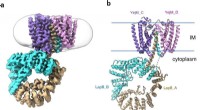
1. Plasma membrane: This is the outer boundary of the cell, acting as a selective barrier that controls what enters and exits the cell. It's composed of a phospholipid bilayer with embedded proteins.
2. Cytoplasm: This is the gel-like substance that fills the cell and contains the organelles. It's primarily composed of water, but also includes salts, proteins, and other molecules.
3. Genetic material (DNA): This contains the instructions for building and maintaining the cell. In eukaryotic cells, DNA is found within the nucleus, while in prokaryotic cells, it's located in a region called the nucleoid.
It's important to note that the structure and function of these parts can vary greatly depending on the type of cell. However, these three components are essential for all cells to function.