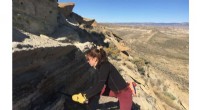
1. Observation: Scientists start by noticing something interesting in the world around them. It could be a strange phenomenon, an unanswered question, or a problem they want to solve.
2. Question: Based on their observations, scientists formulate a question. This question is the heart of their investigation. It helps them focus their research and determine what they're trying to find out.
3. Hypothesis: Scientists then propose a possible explanation for their observation or a prediction about what they expect to find. This educated guess is called a hypothesis. It should be testable, meaning you can design an experiment to see if it's true.
4. Experiment: To test their hypothesis, scientists design and carry out experiments. This involves carefully controlling variables, collecting data, and analyzing the results.
5. Data Analysis: After the experiment is complete, scientists analyze the data they collected. This involves looking for patterns, trends, and relationships within the data to see if their hypothesis is supported.
6. Conclusion: Based on their data analysis, scientists draw a conclusion. They determine whether their hypothesis was supported or refuted by the evidence.
7. Communication: Scientists share their findings with the scientific community by publishing their research in journals, presenting at conferences, and engaging in discussions with other researchers.
Beyond the scientific method, scientists also rely on:
* Critical Thinking: Analyzing information objectively, considering multiple perspectives, and making logical deductions.
* Collaboration: Working with other scientists to share ideas, resources, and expertise.
* Creativity: Thinking outside the box, developing new ideas, and finding innovative solutions to problems.
* Ethics: Following ethical guidelines in research, ensuring animal welfare, and protecting human subjects.
So, in essence, scientists use a combination of careful observation, experimentation, critical thinking, and collaboration to investigate the world around us and uncover new knowledge.