What are protobionts?
Protobionts are hypothetical, early forms of life that are thought to have preceded modern cells. They are not considered true living organisms, but rather pre-cellular structures with some rudimentary life-like properties. They likely:
* Self-assembled from simpler molecules: They may have formed from the spontaneous aggregation of organic molecules, like lipids, proteins, and nucleic acids, in a primordial soup.
* Had a rudimentary membrane: This membrane would have allowed for a degree of internal organization and separation from the surrounding environment.
* Demonstrated some catalytic activity: They likely possessed primitive enzymes or catalysts that allowed for basic chemical reactions to occur within their internal environment.
* Were able to replicate, though imperfectly: They may have been able to pass on their rudimentary "genetic" information through some form of primitive replication, perhaps through a process of template-directed copying of RNA molecules.
How might they have developed?
Here are some leading theories about the formation of protobionts:
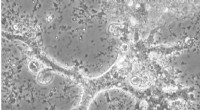
* Coacervates and microspheres: These are simple, spherical structures that can form spontaneously from mixtures of organic molecules in water. They exhibit some rudimentary properties of protobionts, like selective permeability and the ability to grow and divide.
* Liposomes: These are microscopic vesicles that are formed from fatty acids and phospholipids. They can encapsulate molecules and act as simple, compartmentalized environments.
* RNA world hypothesis: This theory suggests that RNA, not DNA, was the primary form of genetic material in early life. RNA has both genetic and catalytic properties, potentially making it the foundation of the first protobionts.
Challenges and unknowns:
* The origin of the first organic molecules: While experiments like the Miller-Urey experiment have shown how organic molecules can form under conditions thought to have existed on early Earth, the precise pathway and location of this formation remains unclear.
* The transition from abiotic to biotic: The exact point at which a self-replicating protobiont emerged from a collection of organic molecules is still a mystery. How did these protobionts develop the complex machinery needed for true life?
* The transition to DNA-based life: If RNA was the initial genetic material, how and when did DNA become the primary form of genetic information?
Ongoing research:
Scientists are constantly exploring these questions through experiments, modeling, and the study of ancient fossils and geological evidence. Key areas of investigation include:
* The chemistry of early Earth: Understanding the conditions and ingredients present on early Earth is crucial to understanding the formation of organic molecules.
* The origin and role of RNA: The study of RNA's structure and function is critical to understanding its potential role as the primordial genetic material.
* Self-assembly processes: Researchers are exploring how simple molecules might have spontaneously formed complex structures like protobionts.
While the precise origins of life remain elusive, scientific research is steadily chipping away at the mystery. With each discovery, we gain a deeper understanding of the complex processes that led to the emergence of life on Earth.