Mosaic:
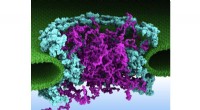
* Diverse Components: The membrane is not a uniform, solid structure. It's a patchwork of different molecules:
* Phospholipids: Form the basic bilayer, creating a flexible barrier.
* Proteins: Embedded within the bilayer, acting as channels, pumps, receptors, etc.
* Cholesterol: Adds rigidity and stability.
* Carbohydrates: Attached to lipids and proteins, acting in cell recognition and signaling.
* Dynamic Arrangement: These components aren't static. They can move around laterally within the membrane, like pieces in a mosaic.
Fluid:
* Lateral Movement: The phospholipids and proteins can move freely within the membrane's plane. This fluidity allows the membrane to be flexible and adaptable.
* Selective Permeability: This fluidity also allows the membrane to control what passes through it, acting as a barrier while remaining permeable to certain molecules.
In essence, the fluid mosaic model describes a cell membrane that is both diverse in composition and dynamic in structure, allowing it to perform its crucial functions.