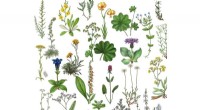
1. Variation: Individuals within a population show variation in their traits. This variation can be due to genetic differences, environmental factors, or a combination of both.
2. Heredity: Traits are passed down from parents to offspring. This means that offspring tend to resemble their parents in terms of certain characteristics.
3. Overproduction: Organisms produce more offspring than can survive and reproduce. This leads to competition for resources like food, water, and space.
4. Differential Survival and Reproduction: Due to the variation in traits, some individuals are better adapted to their environment than others. These individuals are more likely to survive, reproduce, and pass their favorable traits to their offspring.
5. Gradual Change: Over generations, the frequency of favorable traits increases in the population. This leads to a gradual change in the population's characteristics, or evolution.
In summary:
* Natural selection is a process where organisms with traits that make them better adapted to their environment are more likely to survive and reproduce.
* This leads to a gradual change in the characteristics of a population over time, as favorable traits become more common.
Important notes:
* Evolution is not a linear progression towards perfection. It's a process of adaptation to changing environments.
* Natural selection does not create new traits. It acts on existing variation.
* Evolution is a gradual process that occurs over many generations. It's not a sudden or instantaneous change.
The theory of evolution by natural selection is a powerful explanatory framework that helps us understand the diversity of life on Earth. It has been supported by a vast amount of evidence from various fields, including paleontology, genetics, and developmental biology.