Flowers are the reproductive structures of flowering plants (angiosperms). They are made up of four main parts:
1. Sepals: These are usually green, leaf-like structures that protect the developing bud before it blooms. They are collectively called the calyx.
2. Petals: These are often brightly colored and fragrant to attract pollinators like insects and birds. They are collectively called the corolla.
3. Stamens: These are the male reproductive parts. Each stamen consists of a filament that supports the anther, which produces pollen.
4. Pistil: This is the female reproductive part, also called the gynoecium. It consists of the following:
* Stigma: The sticky top part of the pistil that receives pollen.
* Style: The stalk that connects the stigma to the ovary.
* Ovary: The swollen base of the pistil that contains the ovules (future seeds).
Shapes and Structures
The arrangement and shape of these flower parts vary greatly between species, leading to a wide diversity of flower shapes. Some common structures include:
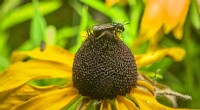
* Radial symmetry: When the flower can be divided into equal halves along any axis, like a star. Examples: roses, lilies, sunflowers.
* Bilateral symmetry: When the flower can be divided into equal halves along only one axis, like a mirror image. Examples: orchids, snapdragons, pea flowers.
* Regular flower: A flower with symmetrical petals of the same size and shape.
* Irregular flower: A flower with asymmetrical petals or petals of different sizes and shapes.
* Tubular corolla: Petals fused into a tube, like a trumpet. Examples: honeysuckle, petunias.
* Bell-shaped corolla: Petals fused into a bell-like shape. Examples: hyacinths, bluebells.
* Funnel-shaped corolla: Petals fused into a funnel-like shape. Examples: morning glories, tobacco flowers.
* Ligulate corolla: Petals fused into a strap-like shape. Examples: dandelions, daisies.
Variations and Adaptations
Flower shape and structure are often adaptations for pollination. For example, flowers pollinated by insects often have bright colors, strong scents, and nectar guides to guide insects towards the pollen and stigma. Flowers pollinated by wind often have dull colors and reduced petals.
Understanding flower organs and shapes is crucial for appreciating the beauty and diversity of flowering plants. It also helps us understand how plants reproduce and evolve.