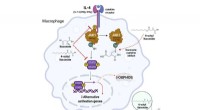
Target gene enrichment is a technique used in genomics to identify and focus on specific groups of genes within a larger dataset, based on a predetermined criteria like their involvement in a particular biological pathway or function.
Here's a breakdown:
1. The Starting Point:
* You begin with a large dataset of genes, often derived from:
* Genome-wide association studies (GWAS): These studies identify genomic regions associated with a specific trait or disease.
* Microarray experiments: These experiments measure gene expression levels under different conditions.
* RNA sequencing (RNA-Seq): This technique sequences all RNA molecules in a sample, providing a comprehensive view of gene expression.
2. The Goal:
* You want to isolate and analyze a subset of genes that are more likely to be relevant to your research question. This could involve:
* Identifying genes involved in a specific biological pathway: For example, genes involved in immune response, cell cycle regulation, or metabolism.
* Focusing on genes that are differentially expressed: These are genes whose expression levels change significantly under different conditions.
* Highlighting genes associated with a specific phenotype: This could be a disease, a drug response, or a specific environmental factor.
3. The Methodology:
* Target gene enrichment is achieved using various computational methods like:
* Gene ontology (GO) enrichment analysis: This method identifies GO terms (functional categories) that are overrepresented in a set of genes.
* Pathway enrichment analysis: This technique identifies pathways that are significantly enriched with genes from your dataset.
* Network enrichment analysis: This approach focuses on identifying enriched modules or clusters of interconnected genes within a network.
4. The Output:
* The outcome of target gene enrichment is a refined set of genes that are more likely to be relevant to your research question. This allows you to:
* Focus your research efforts on a smaller, more manageable set of genes.
* Gain a deeper understanding of the biological processes involved in your area of interest.
* Identify potential drug targets or biomarkers for disease.
In essence, target gene enrichment is a powerful tool for extracting meaningful biological insights from large genomic datasets. By prioritizing relevant genes, it allows researchers to develop more focused and effective research strategies.