By Darlene Zagata
Updated Mar 24, 2022
Meteors—commonly known as shooting stars—are fleeting streaks of light produced when extraterrestrial particles enter Earth’s atmosphere at high velocity. Most are tiny, roughly the size of a grain of sand, but larger fragments occasionally descend to the ground as meteorites.
The intense heat generated by the meteor’s rapid motion causes both the body and the surrounding air to ionize. As the ionized gases recombine, they emit light, creating the luminous trail we observe.
Meteoroids are classified into three principal groups based on their elemental makeup:
Comets, when heated by the Sun, shed dust and rock that form a tenuous tail. As Earth intersects this trail, countless meteoroids are swept into our atmosphere, producing spectacular meteor showers.
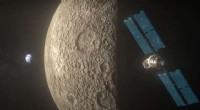
While most meteorites originate from asteroids or cometary debris, research from the University of Leicester’s Department of Physics and Astronomy indicates that some have compositions identical to lunar rocks or Martian surface material, implying that impacts on those bodies can eject material that later reaches Earth.
The Barringer Crater in Arizona, also known as Meteor Crater, spans 1.2 km across and is estimated to be 49,000 years old.