By Jordan Bruns, Updated Mar 24, 2022
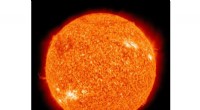
Our Solar System—seven major planets and the dwarf planet Pluto—spans a vast range of distances from the Sun. Because each planet follows an elliptical orbit, these values are averages over time. By subtracting one planet’s mean distance from the Sun from another’s, we can determine the typical gap between the two worlds.
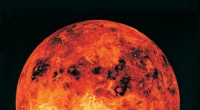
Mercury, the Sun’s nearest neighbor, orbits at an average of 36 million miles (58 million km). Venus follows at 67.1 million miles (108 million km). The difference—31.1 million miles (50 million km)—is the typical separation between these two inner planets.
Earth sits 92.9 million miles (149 million km) from the Sun. Venus lies 25.8 million miles (41 million km) closer, while Mars averages 141.5 million miles (227 million km). Thus Earth and Mars are roughly 48.6 million miles (78 million km) apart.
The outer Solar System begins with Jupiter, 483.4 million miles (777 million km) from the Sun—341.9 million miles (551 million km) beyond Mars. Saturn averages 886.7 million miles (1.43 billion km) from the Sun, making the Jupiter–Saturn gap 403.3 million miles (649 million km). Uranus sits 1,782.7 million miles (2.87 billion km) from the Sun, 896 million miles (1.44 billion km) beyond Saturn. Neptune, at 2,794.3 million miles (4.49 billion km), lies 1,011.6 million miles (1.63 billion km) beyond Uranus.
Pluto, now classified as a dwarf planet, averages 3,666.1 million miles (5.90 billion km) from the Sun. Its distance from Neptune averages 871.8 million miles (1.40 billion km). Because Pluto’s orbit is highly eccentric, it spends about 20 of its 248‑year orbit inside Neptune’s path, becoming temporarily closer to the Sun than Neptune.