By Susan King Updated Mar 24, 2022
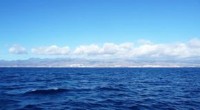
Tides are the rhythmic rise and fall of ocean water levels at any given location. Because water is fluid, the ocean’s bulge is far more pronounced than the bulge of land.
When the Earth faces the moon, a tidal bulge—called the direct tide—forms. At the same time, the opposite side of the planet experiences a bulge driven by inertial forces, producing high tides on both sides of the planet.
Low tides occur between the high tides. Their depth varies by location—some places see only a few feet of retreat, while others experience much greater drops. The cycle repeats roughly every 12.4 hours, shifting 50 minutes later each day as the moon rises.
During full and new moon phases, the sun, moon, and Earth align, amplifying gravitational pull. These spring tides produce the highest high tides and the lowest low tides.
When the moon is at its quarter phases, the sun’s gravity counteracts the moon’s pull. Neap tides are the least extreme, with the lowest high tide and the highest low tide.
If the moon is at perigee—the closest point in its orbit to Earth—its gravitational influence intensifies. Combined with a full or new moon, perigee can produce the most extreme tidal ranges, prompting forecasts for potential coastal flooding.