Jason Reed/Photodisc/Getty Images
While thousands of celestial bodies orbit our Sun, only eight planets hold the title of major planets in our solar system. Arranged from the Sun outward, the order is: Mercury, Venus, Earth, Mars, Jupiter, Saturn, Uranus, and Neptune. A narrow asteroid belt physically separates the inner rocky planets from the outer gaseous giants, and beyond Neptune reside numerous dwarf planets, including the once‑mighty Pluto.
The four inner planets—Mercury, Venus, Earth, and Mars—are all solid, rocky worlds. They are comparatively small and dense, and each spins slowly on its axis. Their compositions are dominated by silicate minerals, and they lack substantial atmospheres (except Venus and Earth).
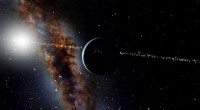
Beyond the asteroid belt lie the four outer planets: Jupiter, Saturn, Uranus, and Neptune. These gas giants are largely composed of hydrogen and helium, making them less dense than their inner counterparts. They possess rapid rotation rates, which flatten their shapes, and each is encircled by a system of rings composed of ice and dust. While Saturn’s rings are the most spectacular, all four giants feature ring systems of some sort.
An astronomical unit (AU) is the average distance between the Earth and the Sun, approximately 149.6 million kilometers. Planetary distances are often expressed in AU: Mercury is about 0.39 AU from the Sun, and Neptune is roughly 30 AU away. Using AU provides a convenient, scale‑free way to compare planetary positions.
The asteroid belt sits between Mars and Jupiter and contains thousands of rocky fragments that never coalesced into a planet. Jupiter’s powerful gravity disturbed the belt’s material, preventing a planet from forming in that zone—a phenomenon first modeled by early 20th‑century astronomers.
In 2005 the discovery of Eris, a trans‑Neptunian body comparable in size to Pluto, sparked a re‑evaluation of planetary classification. The International Astronomical Union now defines a dwarf planet as a large, nearly spherical object that orbits the Sun but has not cleared its orbital neighborhood. This group includes Pluto, Eris, Ceres (formerly classified as an asteroid), and many others beyond Neptune’s orbit.