By Bert Markgraf – Updated Aug 30, 2022
Dario Toledo/iStock/GettyImages
Mercury’s core is a molten nickel‑iron mass, surrounded by a solid rocky mantle and a thin, cratered surface of dust and regolith. Current knowledge stems from Mariner 10, MESSENGER, and ground‑based observations.
Unlike any other planet, Mercury’s makeup remains largely inferred because no lander has yet returned surface samples. Mariner 10’s flybys in 1973‑1974 first mapped the planet, while the MESSENGER orbiter (2011‑2015) refined our understanding through magnetic‑field mapping, spectrometry, and laser ranging.
Studies show that Mercury’s core occupies roughly 70 % of its volume, composed of molten iron and nickel. This massive, fluid core generates the planet’s magnetic field. Above it lies a ~500‑km‑thick rocky mantle, topped by a sparse layer of loose rocks and dust that bears the scars of countless impacts.
Mercury’s tenuous exosphere—only traces of oxygen, hydrogen, and helium—exists because its weak gravity cannot retain a substantial atmosphere and the solar wind erodes any gases that do accumulate. These features set Mercury apart from the other terrestrial worlds.
Mercury’s rotation is slow and resonant: it turns three times on its axis for every two orbits around the Sun, completing one spin in about 58.6 Earth days. This unique 3:2 spin‑orbit resonance creates extreme temperature swings—up to 800 °F on the sun‑lit side and down to ‑300 °F on the dark side.
With a diameter 0.4 × that of Earth, Mercury is slightly larger than our Moon and experiences 0.4 × Earth’s gravity. Its orbit is highly elliptical, reaching a closest distance to the Sun that is also about 0.4 × Earth’s orbital radius.
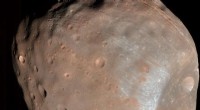
Mercury’s surface resembles the Moon’s: heavily cratered, with the Caloris Basin—an 1,300‑km‑wide, multi‑ring impact crater—being one of the largest in the solar system. Scientists believe this basin formed when a massive asteroid struck Mercury shortly after its formation, sending shock waves through the planet’s interior.
Despite the harsh conditions, exploration continues. In October 2018, ESA and JAXA launched BepiColombo, a twin‑spacecraft mission that will orbit Mercury and deliver unprecedented data on its composition, magnetic field, and geophysical properties. Meanwhile, researchers are still mining MESSENGER’s archive to refine our picture of this enigmatic planet.