Photos.com/Photos.com/Getty Images
Claudius Ptolemaeus, known as Ptolemy, was a Greco‑Roman scholar in Alexandria, Egypt, who lived circa 100–170 A.D. Renowned across astronomy, mathematics, geography, and cartography, he profoundly shaped the scientific worldview of his era.
Although many of his cosmological ideas were later refuted, Ptolemy laid the groundwork that enabled subsequent astronomers to refine celestial models. His seminal treatise, the Almagest, combined rigorous mathematics with observational data to describe the motion of planets through a system of epicycles.
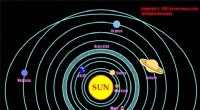
In this framework, the Earth occupied a fixed, central position while all other celestial bodies moved along a series of nested circular paths—epicycles—superimposed on larger deferents. This model was the most sophisticated explanation available at the time and remained influential for over a millennium.
Aristotle had earlier proposed a universe of 55 concentric circles centered on Earth, with planets attached to these circles. Ptolemy expanded this idea by introducing smaller epicycles that could move independently of their parent circles, thereby accounting for observed variations in planetary speed and brightness.
Ptolemy’s seven‑volume Geographica is essentially an ancient atlas. Although most of its maps have not survived, the work’s methodology endures. He provided a systematic approach for creating maps using latitude and longitude and advocated placing north at the top of the page—an orientation that has become standard in cartography.
His guidance encouraged readers to construct their own maps, fostering a collaborative refinement of geographic knowledge that persisted through the Middle Ages and into the Renaissance.
In the Tetrabiblos, Ptolemy treated astrology as a natural science, arguing that planetary motions influence human affairs without resorting to mysticism. Yet he also acknowledged a spiritual dimension, expressing reverence for the celestial bodies as manifestations of divine order.
Little is known about Ptolemy’s personal life beyond his dates of birth and death, but his writings reveal a man deeply versed in contemporary philosophy, appreciative of the arts, and attuned to the spiritual significance of the cosmos.