By John Lindell | Updated August 30, 2022
Our solar system, formed over 4.5 billion years ago, is a dynamic collection of planets, dwarf planets, comets, asteroids, and other debris orbiting the Sun—the system’s central star.
Scientists trace the birth of the solar system to a rotating cloud of gas and dust, known as a nebula. As the nebula collapsed under gravity, the material in the center condensed into the Sun, while clumps of material flung outward coalesced into the planets. The larger clumps accreted massive atmospheres, giving rise to the gas giants—Jupiter, Saturn, Uranus, and Neptune—while the inner planets remained largely rocky.
The Sun dominates the system’s mass, accounting for more than 99 % of the total. The remaining mass is split between the eight planets and countless smaller bodies, with the gas giants holding about 99 % of that non‑solar mass.
From the Sun outward, the sequence is: Mercury, Venus, Earth, Mars, the asteroid belt, Jupiter, Saturn, Uranus, Neptune, and then the dwarf planets beyond. All planets orbit counterclockwise in the ecliptic plane. Orbital periods vary dramatically: Mercury completes a circuit in 88 Earth days; Earth takes 365 days; Jupiter requires 12 years; Neptune, 165 years.
The inner four planets are small, rocky, and possess dense cores. Earth and Mars each host a single moon; Venus and Mercury have none. The outer four are gas giants composed mainly of hydrogen and helium, with extensive moon systems—Jupiter (79), Saturn (83), Uranus (27), and Neptune (14). Saturn’s iconic rings consist of countless icy particles.
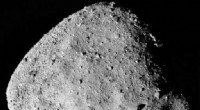
Between Mars and Jupiter lies the asteroid belt, home to millions of rocky fragments ranging from microscopic dust to bodies hundreds of kilometers wide. Beyond Neptune’s orbit, the Kuiper Belt and scattered disc host icy dwarf planets like Pluto. Comets, formed from the cold outer regions, follow highly elliptical orbits that can bring them close to the Sun before flinging them back into the outer reaches of the system, sometimes taking thousands of years to complete a full cycle.