Digital Vision./Photodisc/Getty Images
Discover how the pioneering work of astronomer Harlow Shapley, built on Henrietta Swan Leavitt’s breakthrough, uncovered Earth’s true position within our galaxy.
Leavitt discovered that certain variable stars exhibit a precise relationship between their intrinsic brightness (absolute magnitude) and how bright they appear from Earth (apparent magnitude). By measuring a star’s period and comparing its apparent and absolute magnitudes, astronomers can calculate its distance with remarkable accuracy.
Two key types of pulsating stars provide the cosmic yardsticks needed for this task. Cepheid variables, with periods ranging from 1 to 100 days, shine brightly and are easily observed in nearby galaxies. RR Lyrae stars, though dimmer and oscillating in under a day, share a nearly constant absolute magnitude, making them reliable distance markers within our own Milky Way.
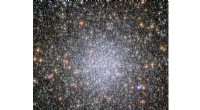
Shapley focused on globular clusters—compact, spherical collections of ancient stars orbiting the galaxy. By locating Cepheid variables in closer clusters and RR Lyrae stars in farther ones, he measured the distances to dozens of clusters across the sky.
The spatial distribution of globular clusters formed a roughly spherical pattern centered on the Milky Way’s core. From this, Shapley inferred that the galactic center lies near the sphere’s center, while the Sun resides on the periphery—approximately two‑thirds of the way from the center to the outer edge of the galaxy. This placement places Earth in one of the Milky Way’s outer spiral arms.