By Mary MacIntosh, Jun 14, 2023 2:38 pm EST
Jupiter is the largest planet in our Solar System, with a mass more than 300 times that of Earth. Its enormous size and bright, reflective cloud decks make it the third brightest object in the night sky after the Moon and Venus. Orbiting the Sun at roughly 5.2 AU (about 500 million miles), a Jovian year lasts nearly 12 Earth years—over 4,300 Earth days—and sunlight takes 40 minutes to reach the planet.
Unlike the rocky inner planets, Jupiter has no solid surface. The planet is a layered mixture of gases, dominated by 90 % hydrogen and 10 % helium. Deeper inside, hydrogen is compressed into a metallic liquid that conducts electricity, generating the planet’s powerful magnetic field. Trace amounts of ammonia and other volatiles give the atmosphere its striking colors.
Discovered by Voyager 1 in 1979, Jupiter’s ring system is faint and close‑in, composed mainly of dust and rocky grains. Unlike Saturn’s icy, glittering rings, Jupiter’s rings are dark and were only seen by high‑resolution spacecraft instruments.
Beyond the asteroid belt, Jupiter’s massive gravity protects the inner planets by redirecting comets and asteroids. A classic example is the breakup of Comet Shoemaker‑Levy 9, which was torn apart by tidal forces before colliding with the planet in 1994.
Jupiter’s atmosphere is dominated by bands of cloud decks formed by ammonia‑rich air. The Great Red Spot—an enormous, long‑running high‑pressure storm—has persisted for over three centuries. The spot spans about 1.3 times Earth’s diameter, larger than the planet Mercury.
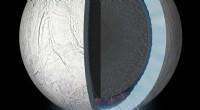
Jupiter hosts 63 confirmed satellites. The four Galilean moons—Io, Europa, Ganymede, and Callisto—were first identified by Galileo in 1610. Ganymede is the largest moon in the Solar System; Io is the most volcanically active body; Europa is a prime candidate for a subsurface ocean that could harbor life. New missions, such as NASA’s Europa Clipper slated for 2024, aim to probe these environments.
Numerous spacecraft have photographed Jupiter’s clouds and moons. NASA’s Juno mission, launched in 2011, has mapped the planet’s magnetic field and atmosphere in unprecedented detail. Earlier missions—Galileo (1989), Cassini (1997), New Horizons (2006), and Pioneer 10 (early 1970s)—provided the first close‑up images and helped shape our understanding of the Jovian system.
Jupiter’s mass is 300× Earth’s, its Great Red Spot is 1.3× Earth’s diameter, and its moon Ganymede out‑size Mercury. Europa may hide oceans; missions are on the way.