Here's why:
* Focus of Study: Earth scientists study the Earth's physical systems, including its atmosphere, oceans, landforms, and geology. Astronomers, on the other hand, study the universe beyond Earth, including stars, planets, galaxies, and cosmic phenomena.
* Methods and Tools: Earth scientists primarily use methods like geological mapping, remote sensing, and laboratory experiments. Astronomers use telescopes, satellites, and complex mathematical models to observe and understand celestial objects.
* Disciplinary Boundaries: Astronomy is generally considered a branch of physics and astrophysics, while Earth science encompasses a range of disciplines like geology, meteorology, oceanography, and environmental science.
However, there are some areas where astronomy and earth science intersect:
* Planetary Science: Studying the planets in our solar system, including their geology, atmospheres, and potential for life, is a shared interest.
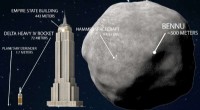
* Impact Events: Astronomers study asteroids and comets, while earth scientists examine their impact craters and the effects of these events on Earth's history.
* Astrobiology: The search for life beyond Earth is a field that draws heavily on both astronomy and biology.
In conclusion, while there are some overlaps in their areas of study, astronomers are primarily focused on the cosmos beyond Earth, while earth scientists focus on Earth's physical systems.