Here's why:
* Novae are binary star systems consisting of a white dwarf and a companion star. The companion star is typically a red giant or a subgiant.
* Accretion: The white dwarf's strong gravity pulls material from its companion, forming an accretion disk.
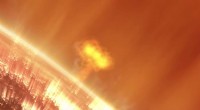
* Thermonuclear Runaway: As material accumulates on the white dwarf's surface, it eventually reaches a critical mass and ignites in a thermonuclear runaway, leading to a sudden, dramatic increase in brightness.
* Cataclysmic Eruption: This explosion, known as a nova eruption, can increase the star's luminosity by thousands or even millions of times.
Important Note: While Novas are the most common type of variable star that undergoes cataclysmic eruptions, there are other types of variable stars that can exhibit similar behavior, including:
* Supernovae: These are even more energetic explosions than Novas. They occur when a star collapses under its own gravity.
* Dwarf Novae: These are less energetic than Novas but still involve a similar accretion and thermonuclear runaway process.
So, while Novas are the classic example, it's essential to remember that there are other possibilities when discussing cataclysmic eruptions in variable stars.