Here's a breakdown:
Mars:
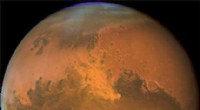
* Dust storms: Mars is known for its massive dust storms, which can engulf the entire planet and last for months. These storms are driven by seasonal changes and can significantly alter the Martian atmosphere, affecting temperature and weather patterns.
* Ice caps: The polar ice caps on Mars grow and shrink with the seasons, influencing the Martian climate.
* Changes in atmospheric pressure: The Martian atmosphere is very thin, and its pressure varies significantly. These variations can influence temperature and weather patterns.
Venus:
* Runaway greenhouse effect: Venus's thick atmosphere is dominated by carbon dioxide, leading to an extreme greenhouse effect. While the surface temperatures are incredibly hot and stable, there might be minor fluctuations in the atmosphere over time.
* Volcanic activity: Volcanic eruptions can release significant amounts of gases and particles into the atmosphere, potentially influencing the Venusian climate.
Jupiter, Saturn, Uranus, and Neptune:
* Seasonal changes: These giant planets experience dramatic seasonal changes due to their tilted axes. These changes can affect the distribution of clouds and storms.
* Internal heat: These planets generate their own internal heat, which can influence their atmospheres and create turbulent weather patterns.
* Magnetic fields: Their strong magnetic fields interact with the solar wind, creating auroras and potentially affecting the upper atmosphere.
Important to note:
* Time scales: Climate changes on these planets often occur over much longer time scales than on Earth. For example, the Martian dust storms can take months to develop and dissipate.
* Different mechanisms: While Earth's climate change is primarily driven by human activities, the changes on other planets are largely driven by natural factors like solar radiation, volcanic activity, and internal heat.
Therefore, while we can talk about "climate change" on other planets, it's important to understand that these changes are often different in nature, scale, and cause compared to what we see on Earth.