1. The Giant Molecular Cloud:
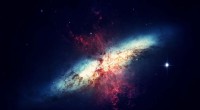
* Our solar system began as a vast, cold, and mostly hydrogen-filled cloud of gas and dust, known as a giant molecular cloud.
* This cloud was incredibly spread out but contained the raw materials needed to form stars and planets.
2. Gravitational Collapse:
* A slight disturbance, perhaps a nearby supernova explosion, triggered a gravitational collapse within the cloud.
* As the cloud contracted, it spun faster, concentrating its mass at its center.
3. Protoplanetary Disk Formation:
* The collapsing cloud flattened into a rotating disk of gas and dust called a protoplanetary disk.
* The center of the disk became hotter and denser, forming the proto-sun, a developing star.
4. Planet Formation:
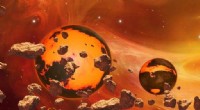
* Within the disk, tiny dust particles started to clump together, forming larger and larger bodies through a process called accretion.
* These clumps, called planetesimals, grew by attracting more particles and eventually coalesced into the planets we know today.
5. Differentiation and Evolution:
* As planets grew, their internal heat from collisions and radioactive decay caused differentiation, separating materials based on density.
* Heavy elements like iron sank to the core, while lighter elements like silicon formed rocky crusts.
* Gaseous planets like Jupiter and Saturn formed farther from the sun, where it was cold enough for volatile substances like hydrogen and helium to remain in their gaseous states.
6. The Sun's Ignition:
* The proto-sun continued to grow and heat up until it reached a critical mass.
* This triggered nuclear fusion, where hydrogen atoms fused to form helium, releasing immense energy and marking the birth of our sun.
7. Solar Wind and Planetary Evolution:
* The sun's intense solar wind swept away much of the leftover gas and dust from the protoplanetary disk, shaping the planets we see today.
* Planets continued to evolve, experiencing collisions, volcanic activity, and other geological processes that shaped their landscapes and atmospheres.
This process, known as the nebular hypothesis, is the prevailing theory explaining how our solar system formed. While it's a simplified explanation, it highlights the key steps involved in the birth of our sun and planets from a vast cloud of dust and gas.