Here's how it happens:
1. Cosmic Debris: The dust and rock particles come from various sources like comets, asteroids, and even the remnants of planet formation. These objects shed debris as they travel through space.
2. Earth's Atmosphere: As Earth orbits the Sun, it occasionally encounters these debris streams. When a particle enters the atmosphere, it collides with air molecules at incredibly high speeds (up to 70 kilometers per second!).
3. Friction and Heat: The intense friction between the particle and the air causes the particle to heat up tremendously. This heat makes the particle glow, creating the bright streak of light we see as a shooting star.
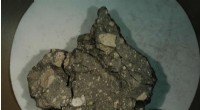
4. Burning Up: The particle usually burns up completely before reaching the ground. Only the largest particles, called meteorites, survive the fiery descent and land on Earth.
5. The "Shooting" Effect: The streak of light we see appears to "shoot" across the sky because of the particle's speed and the way our eyes perceive movement.
So, the next time you see a shooting star, remember it's not a star falling but a tiny speck of space dust burning up in our atmosphere!