Factors affecting visibility with a telescope:
* Earth's curvature: This is the biggest limitation. The Earth curves away, so even with a powerful telescope, you can't see beyond the horizon.
* The horizon distance: This is determined by your elevation above sea level. You can calculate the horizon distance using a formula or online calculators, but it's typically around 5 km (3 miles) from sea level.
* Atmospheric conditions:
* Clear vs. hazy air: Clear air allows light to travel further without scattering, enhancing visibility. Hazy air scatters light, reducing clarity.
* Turbulence: Air currents can distort light, causing images to shimmer and blur. This is why astronomical observatories are often located on mountaintops with minimal turbulence.
* Light pollution: Artificial light from cities and towns can overwhelm faint objects in the night sky, decreasing visibility.
* The object's brightness: A telescope can magnify faint objects, but it can't create light where there is none. The brightness of the object is crucial for seeing it.
* The telescope's aperture: The diameter of the telescope's main lens or mirror determines its light-gathering ability. Larger apertures can gather more light, improving visibility of faint objects.
* The telescope's magnification: While magnification can make objects appear larger, it doesn't necessarily increase visibility. Excessive magnification can actually reduce image quality due to atmospheric effects.
Seeing land objects:
* Terrain: A telescope won't help you see over a mountain or through dense forest. Visibility is limited by the terrain's features.
* Distance: The limitations of Earth's curvature usually prevent seeing land objects very far with a telescope. You might be able to see features on a distant hill or identify a landmark, but not much further.
Seeing celestial objects:
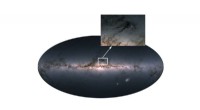
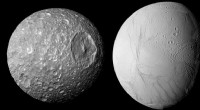
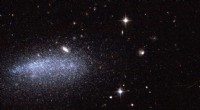
* Telescopes are much more powerful for viewing distant celestial objects: This is because they're not limited by Earth's curvature. A powerful telescope can reveal galaxies billions of light-years away, while a terrestrial telescope will be limited by the horizon.
In conclusion:
* There's no single "maximum distance" for a telescope.
* It depends on many factors, primarily Earth's curvature, atmospheric conditions, and the object's brightness.
* For terrestrial objects, a telescope won't significantly increase your viewing distance beyond what you can see with your naked eye.
* For astronomical objects, telescopes are incredibly powerful tools that can reveal distant galaxies and other celestial wonders.