1. Observations of Planetary Motion:
* Retrograde Motion: Planets appear to move backwards in the sky at times. This was initially explained by complex, Earth-centered models, but Copernicus' heliocentric model explained it naturally as a result of Earth overtaking slower-moving outer planets.
* Phases of Venus: Galileo observed that Venus goes through phases, just like the Moon. This was only possible if Venus orbited the Sun, not the Earth.
* Parallax: As Earth orbits the Sun, nearby stars appear to shift slightly in position against the background of more distant stars. This shift (parallax) was first measured in the 19th century, providing strong evidence for Earth's motion around the Sun.
2. Kepler's Laws of Planetary Motion:
* First Law: Planets orbit the Sun in elliptical paths, not perfect circles. This was impossible to explain with an Earth-centered model.
* Second Law: A planet's speed changes as it orbits the Sun, moving faster when closer and slower when farther away. Again, this couldn't be explained by Earth-centered theories.
* Third Law: The square of a planet's orbital period is proportional to the cube of its average distance from the Sun. This mathematical relationship strongly supports a Sun-centered system.
3. Gravitational Evidence:
* Newton's Law of Universal Gravitation: This law states that every object in the universe attracts every other object with a force proportional to their masses and inversely proportional to the square of the distance between them. The Sun's massive gravitational pull holds the planets in their orbits.
* Direct Observations: We have sent probes to other planets, confirming that they are orbiting the Sun, and our understanding of gravity has allowed us to calculate the Sun's mass and influence.
4. Modern Observations:
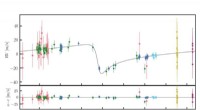
* Doppler Spectroscopy: By analyzing the light from stars, we can detect the "wobble" caused by orbiting planets, confirming that they are orbiting a star, not the other way around.
* Direct Imaging: Telescopes like the Hubble Space Telescope have taken pictures of planets orbiting other stars, providing visual confirmation of the heliocentric model.
5. Simplicity and Consistency:
* The heliocentric model provides a simpler and more consistent explanation for all observed phenomena than any Earth-centered model.
In conclusion: The heliocentric model is not just a theory; it's a well-established scientific fact supported by a massive body of evidence gathered over centuries.
It's important to note that the concept of a geocentric (Earth-centered) universe was deeply ingrained for centuries. It required careful observations, innovative thinking, and challenging established beliefs to reach the heliocentric conclusion.