* Our location: We are located within the Milky Way, specifically in one of its spiral arms. This means we're surrounded by dust and gas, obscuring our view of the galaxy's entirety.
* Dust and gas: The interstellar medium (the space between stars) is filled with dust and gas, which absorb and scatter light. This makes it difficult to see distant parts of the galaxy.
* The Milky Way's shape: Our galaxy is a spiral disk with a central bulge. We can see the disk from within, but we're blocked from viewing the central bulge by the dust and gas in our galactic arm.
What we can see:
* The galactic plane: This is the bright band of stars we see stretching across the night sky, which represents the Milky Way's disk as seen from our vantage point.
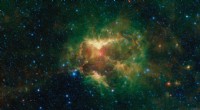
* Nearby stars and clusters: We can see individual stars, star clusters, and nebulae relatively close to us.
* Radio waves and infrared light: Telescopes that detect radio waves and infrared light can penetrate the dust and gas to see deeper into the Milky Way.
In summary:
While we can see a beautiful and impressive view of the Milky Way's galactic plane, we are limited to a small portion of the galaxy. Our position within it and the obscuring dust and gas make it impossible to see the entire galaxy with the naked eye.