Here's a breakdown:
1. Elliptical Galaxies:
* Shape: Smooth, oval, and without spiral arms.
* Structure: They contain mostly old, red stars and have little gas and dust.
* Composition: Composed primarily of older, red stars and very little gas and dust.
* Types: Classified from E0 (almost circular) to E7 (highly elongated) based on their ellipticity.
2. Spiral Galaxies:
* Shape: Flat, disk-shaped with spiral arms winding outward from a central bulge.
* Structure: Contains both old and young stars, gas, and dust.
* Composition: Contains both young, blue stars (in the arms) and older, red stars (in the bulge).
* Types: Further categorized into two sub-types:
* Normal Spiral Galaxies (S): Have a central bulge and tightly wound spiral arms. Classified as Sa (tightly wound arms) to Sc (loosely wound arms).
* Barred Spiral Galaxies (SB): Have a bar-shaped structure in their center from which spiral arms emerge. Similar classification as Sa, Sb, and Sc.
3. Lenticular Galaxies (S0):
* Shape: Intermediate between elliptical and spiral galaxies. They have a disk but no spiral arms.
* Structure: Contain both young and old stars but with less gas and dust than spiral galaxies.
* Composition: Contain a mix of young and old stars, but with less gas and dust than spiral galaxies.
4. Irregular Galaxies:
* Shape: No distinct shape or regular structure.
* Structure: Have a mix of young and old stars, gas, and dust, often with ongoing star formation.
* Composition: Contains both young and old stars, gas, and dust.
* Types: Further categorized into:
* Irr-I Galaxies: Show some structure, but not enough to be considered spiral or elliptical.
* Irr-II Galaxies: Have no identifiable structure.
Beyond the Hubble Sequence:
* Dwarf Galaxies: Much smaller than the galaxies described above, often irregular in shape.
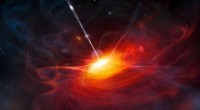
* Active Galaxies: Contain active galactic nuclei (AGN), which are supermassive black holes emitting enormous amounts of energy.
Important Note: This classification system is just a framework, and there are many galaxies that don't fit neatly into any of these categories. Astronomers continue to discover new types of galaxies and refine our understanding of how they evolve.