Intrinsic Properties:
* Mass: The most fundamental difference. More massive stars are hotter, brighter, and have shorter lifespans.
* Temperature: Determines the color of a star. Hotter stars are blue, while cooler stars are red.
* Luminosity: The amount of light a star emits, directly related to its size and temperature.
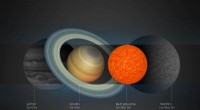
* Radius: The physical size of a star. Giants and supergiants are much larger than dwarf stars.
* Chemical Composition: Stars are primarily made of hydrogen and helium, but they also contain trace amounts of other elements, which can influence their evolution.
* Age: Stars form over time and evolve through various stages, with younger stars generally being more massive and hotter.
Evolutionary Stage:
* Main Sequence: The longest stage in a star's life, where it fuses hydrogen into helium. The position on the main sequence reflects its mass.
* Giant Phase: After exhausting hydrogen fuel in their core, stars expand into giant or supergiant phases.
* White Dwarf, Neutron Star, or Black Hole: The final stages of stellar evolution, depending on the star's initial mass.
Other Properties:
* Rotation: Stars spin, and their rotation rate can influence their shape and magnetic activity.
* Magnetic Fields: Stars possess magnetic fields that can cause flares, sunspots, and other phenomena.
* Binaries and Multiple Star Systems: Many stars exist in pairs or groups, interacting with each other gravitationally.
Observational Differences:
* Apparent Magnitude: How bright a star appears from Earth, influenced by its luminosity and distance.
* Spectral Type: Classified based on the absorption lines in their spectra, revealing their temperature and chemical composition.
* Proper Motion: The apparent motion of a star across the sky over time, due to its movement through space.
In Summary:
The diverse properties of stars create a vast spectrum of celestial objects, each with its unique characteristics and evolutionary path. Studying these differences allows us to understand the processes that govern stellar life and the formation of elements in the universe.