Here's why:
* Gravity: Our current moon exerts a significant gravitational pull on Earth, and any other celestial body in close proximity would have a noticeable effect on tides and other astronomical phenomena. We haven't observed any anomalies that would indicate the presence of a second moon.
* Observations: Astronomers constantly monitor the night sky with powerful telescopes. If a second moon existed, it would have been detected long ago.
* No official documentation: There's no scientific research or official documentation from any reputable space agency that supports the existence of a second moon.
Possible reasons for the myth:
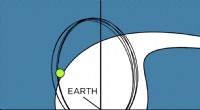
* Misinterpretation of celestial objects: Some people might confuse other celestial objects, such as asteroids or meteoroids, with a second moon.
* Folklore and legends: Many cultures have tales of multiple moons or other celestial bodies, which may have contributed to the belief in a second moon.
* Science fiction: The idea of a second moon is a popular theme in science fiction, which can influence people's perceptions.
In conclusion, while the idea of a second moon is intriguing, it's not supported by scientific evidence. The Earth has only one natural satellite: the moon we all know and admire.