1. Spiral Galaxies:
* Characteristics:
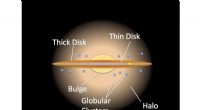
* Disk-shaped with a central bulge and spiral arms that extend outwards.
* Contain significant amounts of gas and dust.
* Actively forming stars in their arms.
* Often have a bar-like structure in their central bulge.
* Examples: Milky Way, Andromeda Galaxy
2. Elliptical Galaxies:
* Characteristics:
* Smooth, oval-shaped with no spiral arms.
* Contain mostly old stars, less gas and dust.
* Relatively inactive star formation.
* Come in a range of sizes, from dwarf ellipticals to giant ellipticals.
* Examples: M87, NGC 4649
3. Irregular Galaxies:
* Characteristics:
* Lack a defined shape or structure.
* Often result from collisions or interactions between other galaxies.
* Contain a mixture of old and young stars, as well as significant gas and dust.
* Show active star formation.
* Examples: Large Magellanic Cloud, Small Magellanic Cloud
It's important to note that this is a simplified classification. Astronomers further subdivide these types into more detailed categories based on specific characteristics like:
* Spiral Galaxies: Normal spirals, barred spirals, lenticular galaxies
* Elliptical Galaxies: Giant ellipticals, dwarf ellipticals
* Irregular Galaxies: Interacting galaxies, dwarf irregular galaxies
This classification scheme helps astronomers understand the evolution and characteristics of different types of galaxies and their impact on the Universe.