Here's the breakdown:
* Blue Stars and Energy: Hot, blue stars emit a lot of ultraviolet (UV) radiation. This high-energy radiation interacts with the surrounding gas and dust clouds, causing the atoms within these clouds to become ionized.
* Ionization and Emission: Ionized atoms are unstable and tend to recombine with electrons. During this recombination process, the electron can drop to a lower energy level, releasing a photon of light. The color of this emitted light depends on the energy difference between the two energy levels.
* Hydrogen and Red: Hydrogen, the most abundant element in the universe, emits photons in the red part of the spectrum when its electron transitions from the second to the first energy level. This is why many emission nebulae appear reddish, as hydrogen is a dominant constituent.
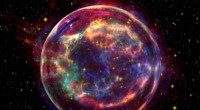
* Other Colors: Other elements, like oxygen, nitrogen, and sulfur, can also emit photons at different wavelengths, resulting in different colors like green, blue, or even pink.
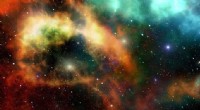
* Complex Nebulae: Many emission nebulae are actually a mix of colors due to the presence of multiple elements and different excitation processes. This is why you see a variety of colors in nebulae like the Orion Nebula.
So, while hot, blue stars are often associated with emission nebulae, the color of the nebula depends on the specific atoms present and the energy levels involved in the emission process. It's not always red!