Here's why:
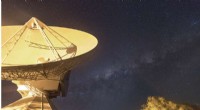
* The equator offers the best vantage point: The Earth's rotation axis is tilted, causing different hemispheres to experience varying amounts of sunlight throughout the year. This leads to the concept of "circumpolar stars" – stars that never set because they are close enough to the celestial pole that they remain above the horizon. At the equator, there are no circumpolar stars, meaning all stars are visible at some point during the year.
* The "all" is a slight exaggeration: While a vast majority of stars are visible from the equator, there are some exceptions. These include stars that are too faint to be seen from Earth, even with ideal conditions, and stars obscured by dust and gas clouds in our galaxy.
* Other locations have varying visibility: While the equator offers the most comprehensive view of the night sky, locations closer to the poles have circumpolar stars that are visible all year round.
In summary, while the equator provides the most optimal viewing for the largest number of stars, saying "all stars" is a slight oversimplification.