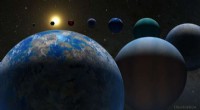
* Proximity: The moon is our closest celestial neighbor, orbiting just about 238,900 miles away from Earth. In contrast, even the closest planet, Venus, is millions of miles away. Stars are even further, light-years away. This close proximity makes the moon appear much larger in our sky.
* Angular Size: Angular size is the apparent size of an object as seen from Earth. It depends on both the object's actual size and its distance. While planets and stars are physically much larger than the moon, their immense distance makes their angular size appear very small. The moon, being much closer, has a larger angular size.
* Lack of a Background: When we look at stars and planets, we see them against a background of other distant stars, creating a sense of depth and making them appear smaller. The moon, however, is often viewed against the darkness of space, making it stand out and appear larger.
* Illusions: Our brains can also play tricks on us, especially when observing objects near the horizon. The moon appears larger near the horizon due to an optical illusion known as the "moon illusion," where our brains perceive objects as larger when they are near the ground.
In short, the moon appears bigger because it's much closer to us than any other celestial object we can see with the naked eye.