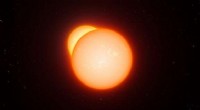
Apparent magnitude is a logarithmic scale that describes the brightness of an object as seen from Earth. It is not a measure of the object's actual luminosity, but rather the amount of light that reaches our planet.
Here are some key points about apparent magnitude:
* Lower magnitudes mean brighter objects. For example, a star with an apparent magnitude of -1 is brighter than a star with an apparent magnitude of 1.
* The scale is logarithmic. Each magnitude step represents a difference of about 2.5 times in brightness.
* It is affected by distance. A very luminous object that is far away might appear dimmer than a less luminous object that is closer.
Other related terms:
* Absolute magnitude: A measure of an object's intrinsic brightness, as if it were placed at a standard distance of 10 parsecs from Earth.
* Luminosity: The total amount of energy emitted by an object per unit time.
Therefore, apparent magnitude is the most appropriate measure for the amount of light received on Earth.