Basic Concepts:
* Celestial Body: Any natural object in space, such as stars, planets, moons, comets, asteroids, and nebulae.
* Light-year: The distance light travels in one year (approximately 5.88 trillion miles or 9.46 trillion kilometers).
* Astronomical Unit (AU): The average distance between the Earth and the Sun (approximately 93 million miles or 150 million kilometers).
* Parsec: A unit of distance used in astronomy, equal to about 3.26 light-years.
Stars and Stellar Evolution:
* Star: A giant ball of hot, glowing gas that produces its own light and heat through nuclear fusion.
* Constellation: A group of stars that appear close together in the sky, forming a recognizable pattern.
* Nebula: A cloud of gas and dust in space.
* Supernova: A powerful explosion that occurs at the end of a star's life.
* Black Hole: A region of spacetime where gravity is so strong that nothing, not even light, can escape.
Planets and Solar Systems:
* Planet: A celestial body that orbits a star and is large enough to be rounded by its own gravity.
* Exoplanet: A planet that orbits a star outside of our solar system.
* Satellite: A celestial body that orbits a planet.
* Asteroid: A rocky body that orbits the Sun, typically found in the asteroid belt between Mars and Jupiter.
* Comet: An icy body that orbits the Sun and leaves a trail of gas and dust as it approaches.
Galaxy and Universe:
* Galaxy: A vast collection of stars, gas, dust, and dark matter held together by gravity.
* Milky Way: The galaxy where our solar system is located.
* Universe: The entirety of space and time, including all matter and energy.
* Redshift: The stretching of light waves as an object moves away from an observer.
* Dark Matter: A mysterious form of matter that does not interact with light but exerts gravitational influence.
Other terms:
* Magnitude: A measure of the brightness of a celestial object.
* Spectrum: The range of wavelengths of light emitted by a celestial object.
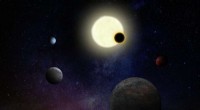
* Transit: When a celestial object passes in front of another object, as seen from Earth.
* Eclipse: When one celestial body blocks the light from another.
* Zodiac: A band of constellations that the Sun, Moon, and planets appear to travel through.
This is just a small selection of astronomical terms. There are many more specialized terms depending on the area of astronomy being studied.
Remember, this is just a starting point. There's always more to learn about the vast and fascinating world of astronomy!