1. Nebula:
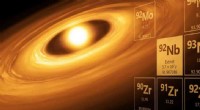
- Stars begin as vast clouds of gas and dust called nebulas.
- These clouds are mostly hydrogen and helium.
- Gravity pulls the material together, causing the cloud to collapse and heat up.
2. Protostar:
- As the nebula collapses, it forms a dense, hot core called a protostar.
- The protostar continues to grow in mass and temperature.
- It's still not hot enough to fuse hydrogen, so it doesn't yet shine like a star.
3. Main Sequence Star:
- Once the protostar reaches a critical temperature and pressure, nuclear fusion begins in its core.
- Hydrogen atoms fuse to form helium, releasing tremendous energy.
- This energy is what makes the star shine and creates outward pressure that balances the inward pull of gravity.
- Most of a star's life is spent in this stable main sequence stage.
4. Red Giant (or Supergiant):
- Eventually, the star runs out of hydrogen in its core.
- The core contracts and heats up, causing the outer layers to expand and cool.
- The star becomes much larger and cooler, turning red.
5. Post-Red Giant Stages:
- The star's fate now depends on its initial mass:
* Low-Mass Stars: These stars (like our Sun) become white dwarfs, incredibly dense, hot remnants of their former selves that slowly cool over billions of years.
* Intermediate-Mass Stars: These stars undergo a period of unstable pulsating and shedding their outer layers, forming planetary nebulas. The core collapses into a white dwarf.
* High-Mass Stars: These stars undergo a dramatic, explosive death as supernovae, scattering elements into space.
6. Remnant:
- The final remnants of a star's life depend on its mass:
* White Dwarfs: Cool and fade over time.
* Neutron Stars: Extremely dense and compact objects formed from the core of a supernova, composed mostly of neutrons.
* Black Holes: Form when the core of a very massive star collapses completely, creating a region of spacetime with such strong gravity that nothing, not even light, can escape.
Important Notes:
* This is a simplified overview. Star evolution is complex and there are variations based on a star's initial mass and composition.
* The lifetime of a star is inversely proportional to its mass. More massive stars live shorter, more dramatic lives, while less massive stars live longer, quieter lives.
* The elements created during a star's life, especially in supernovae, are the building blocks for new stars and planets. This is the process of cosmic recycling.